
Warm-ups that are not warm-ups
Most drama warm-ups train something specific and are taught as though they train enthusiasm. What each of the common ones is actually for.
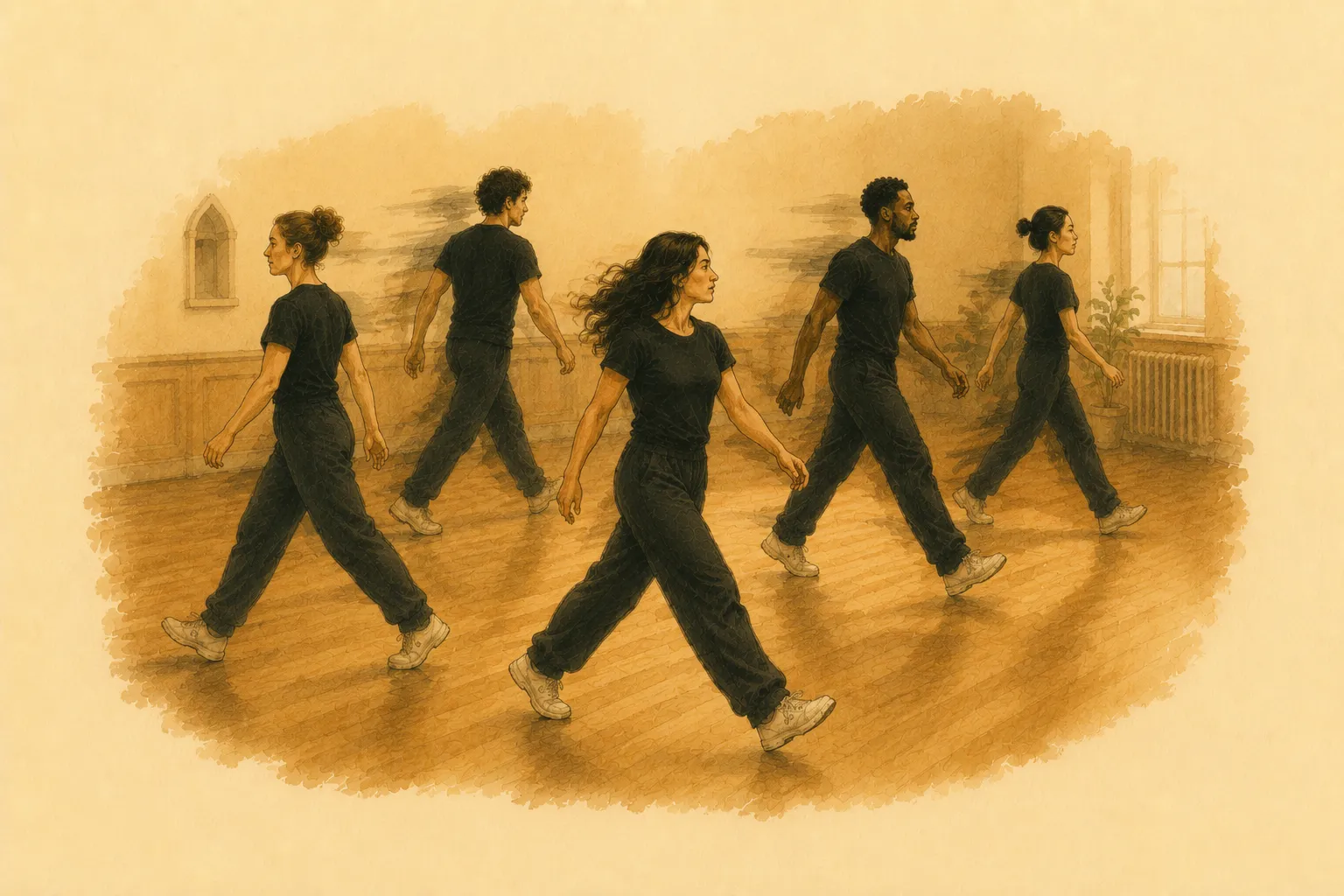
Ask most drama teachers what a warm-up is for and the answer involves energy, focus, or getting people out of their heads. All true, and none of it explains why one game works better than another for a particular lesson.
Nearly every standard warm-up trains something specific. Knowing which is which turns ten minutes of filler into the first exercise of the lesson.
Zip Zap Boing
Trains: accepting a direction change without deciding first.
The game is a chain of impulses where the correct response is instant and the wrong one is hesitation, not error. Students who fail are almost always students who were planning.
Use it before: anything about offers, or a lesson where the previous week produced a lot of blocking. It makes speed of acceptance feel normal before anybody is asked to do it in a scene.
Mirroring in pairs
Trains: sustained attention on another person’s body.
The most underrated exercise in common use. It is the only warm-up where a student cannot succeed by being interesting, and it produces nothing anybody can judge — which makes it the right first exercise for a group that has never worked together.
Use it before: anything requiring students to notice each other. Which is everything, in practice.
Word association in a circle
Trains: producing without editing.
A student who pauses is editing, and the game makes the pause audible to the whole circle, which is uncomfortable and effective. The variant where a mistake is celebrated rather than penalised does more for a nervous group in five minutes than any amount of reassurance.
Use it before: any exercise where students will have to speak without planning.
Counting to twenty as a group
Trains: listening for the shape of a room rather than for words.
Nobody speaks over anybody, nobody leads, and the group starts again from one whenever two people speak at once. What it actually trains is attention to everybody at once, which is the thing that makes group scenes possible.
Use it before: anything with more than two people in a scene.
Object transformation
Trains: committing to an offer that came from your own body.
The student holds something imaginary and it becomes something else, definitively and without explanation. What it is really rehearsing is the willingness to assert a fiction and let it be true — which is the same muscle as accepting somebody else’s.
Use it before: space work, or a lesson where students have been narrating what they are doing instead of doing it.
Name games
Trains: almost nothing, and that is fine.
They exist to make a group of strangers into a group, which is a real job and worth ten minutes in a first session. It is worth being clear with yourself that this is what is happening, so that the fourth week’s warm-up is chosen for a reason rather than out of habit.
The question worth asking on a Sunday
Not “what warm-up should I do” but “what will this lesson ask them to do that they will find hard?”
If the lesson needs them to accept quickly, warm up with a game that punishes planning. If it needs them to notice each other, warm up with mirroring. If it needs them to speak without editing, warm up with word association.
The warm-up stops being a preamble and becomes the first version of the same exercise — easier, sillier, with lower stakes and no audience. Which is what it should have been all along.
Questions
- How long should a warm-up be?
- Ten minutes for most groups. Beyond fifteen it becomes the lesson, and a class that has spent twenty minutes playing games has learned that the games are the subject.
- Do adults need them?
- More than teenagers, usually. An adult who has come from an office needs the transition more and is less willing to look foolish, which is exactly what the first five minutes are for.