
Status: teach the flip, not the level
Students asked to 'play high status' produce a caricature. Students asked to change status halfway through produce a scene. The difference is where you put the instruction.
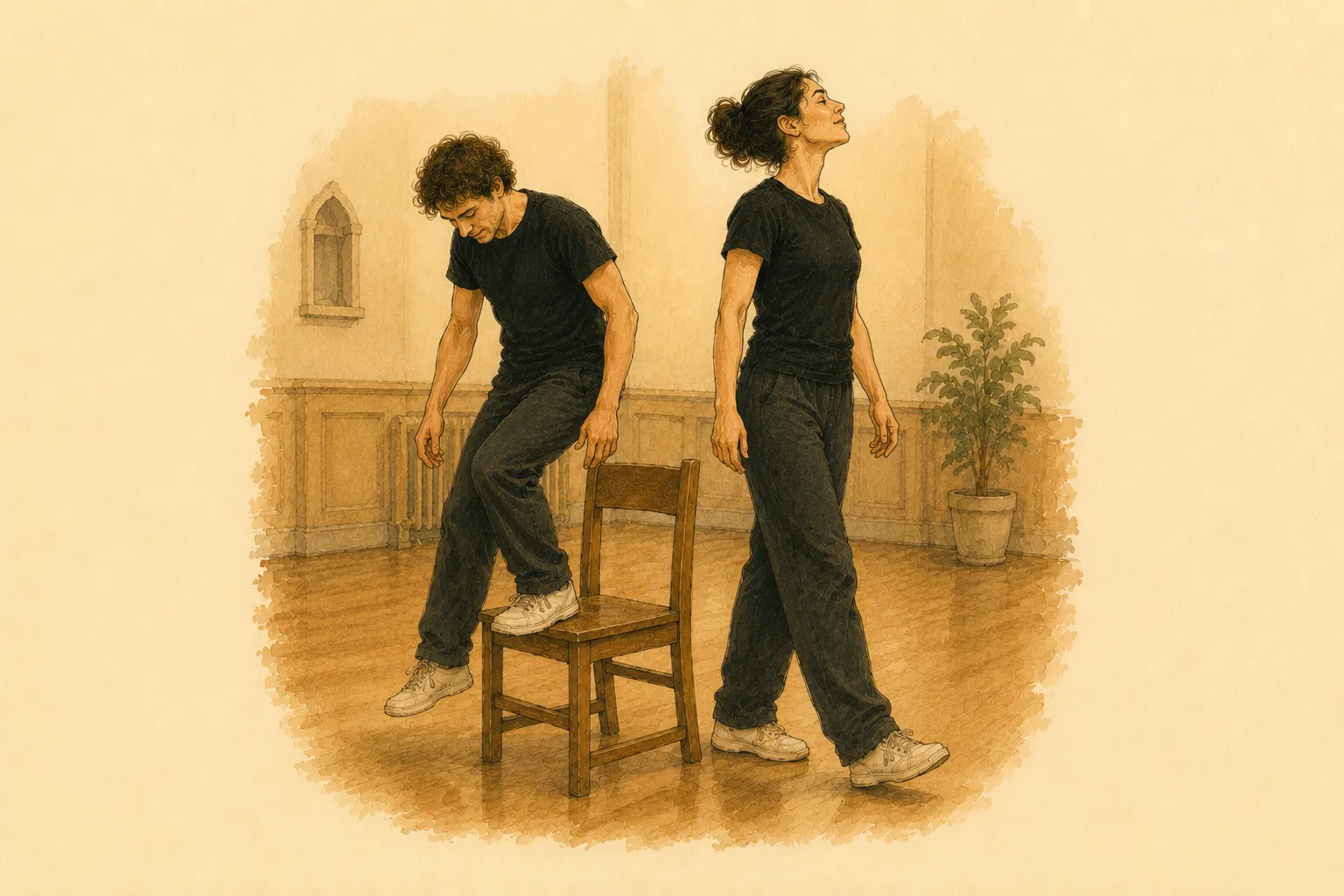
Keith Johnstone’s chapter on status in Impro is the most-photocopied thing in drama teaching, and the most commonly mistaught. The mistake is nearly always the same: the exercise asks students to be a status, and status is not a state.
What goes wrong with “play high status”
Ask a class of fifteen-year-olds to play high status and you will get, in order: a wide stance, a slow voice, a hand on a chair back, and about forty seconds of material. It is a costume. Nobody is watching anybody, because the instruction was about the self.
The scene that follows has no engine, because status in Johnstone’s sense is not a property of a person. It is the relationship between two people, and it is only interesting while it is moving.
Put the instruction on the change
The version that works asks for a transition and lets the level look after itself:
“Start the scene lower than her. By the end, be higher. I do not care how.”
Now the student has to watch the other person, because the only way to end higher is to notice where they are. The instruction has made attention compulsory, which is the whole trick.
Three shapes worth having:
The flip. Two players, one changes. The other’s job is to notice and adjust. The scene is over when the room can see it has happened.
The slow slide. The change happens across the whole scene rather than at a moment. Harder, and better for a group that has already done the flip — it stops being a gag.
The double flip. Both change, at different times. Almost always too much for a first term, and worth keeping in reserve, because a group that can do it will tell you they are ready.
The tell that a student has understood it
They stop playing status and start playing the other person’s status. A student who has got it will lower themselves to raise you, or hold a pause because you filled the last one. The move is visibly reactive, and it is the moment the exercise starts training listening rather than posing.
That is also the assessable moment, if you are assessing. Not “did they achieve high status” — a question with no honest answer — but “was the change legible to the room”. It is one you can defend in a moderation meeting.
Two things that make it worse
Naming the level out loud, mid-scene. “You’re high status now” tells the other player what to do about it, and the scene becomes a negotiation between two people who both heard the teacher. If you must adjust it, adjust it privately, or hold it for the debrief.
Giving both players the same instruction. Two students both trying to end higher produces an argument, and an argument is what a status scene looks like when nobody is watching anybody. Give them different tasks and the scene does the work.
Where the constraint should live
If you are writing this down — a scored exercise, a card, a note — put it on the player, not on the scene. “You want her to sit down” is a status instruction that never uses the word. The student plays an objective and the status happens, which is the order Johnstone was arguing for in the first place.
A scene-level constraint like “this is a high-status scene” tells everybody the answer, and the students spend the scene demonstrating rather than finding.
Questions
- Should I use the words 'high status' and 'low status' with students?
- With teenagers and adults, yes — the vocabulary is useful and Johnstone's own. With younger children the words import a hierarchy that gets acted rather than played. 'Who is more comfortable in this room' asks for the same thing without the label.
- How do you assess status work?
- By whether the change was legible to somebody watching, not by whether it was correct. A student who lowered their status in a way the room could read has done the thing; a student who performed a textbook low-status posture and nothing happened has not.